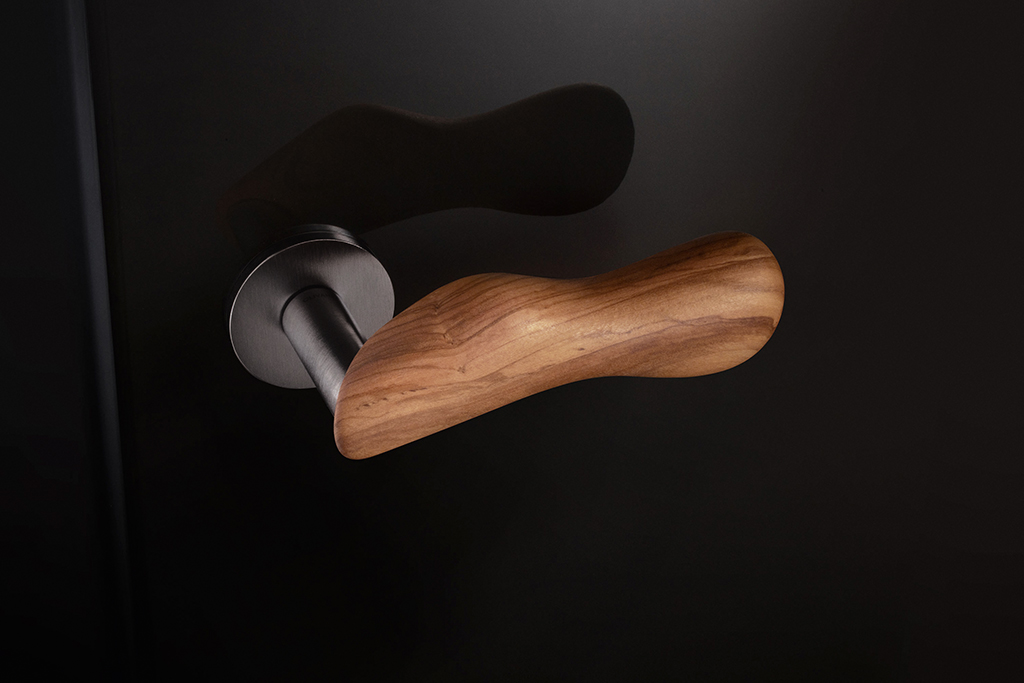
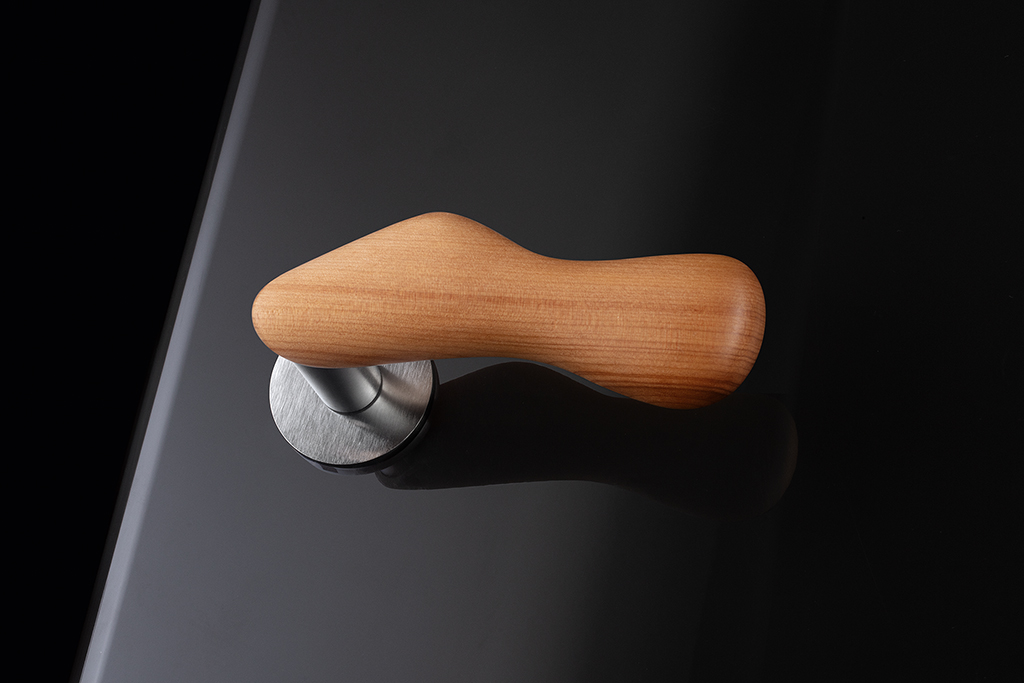
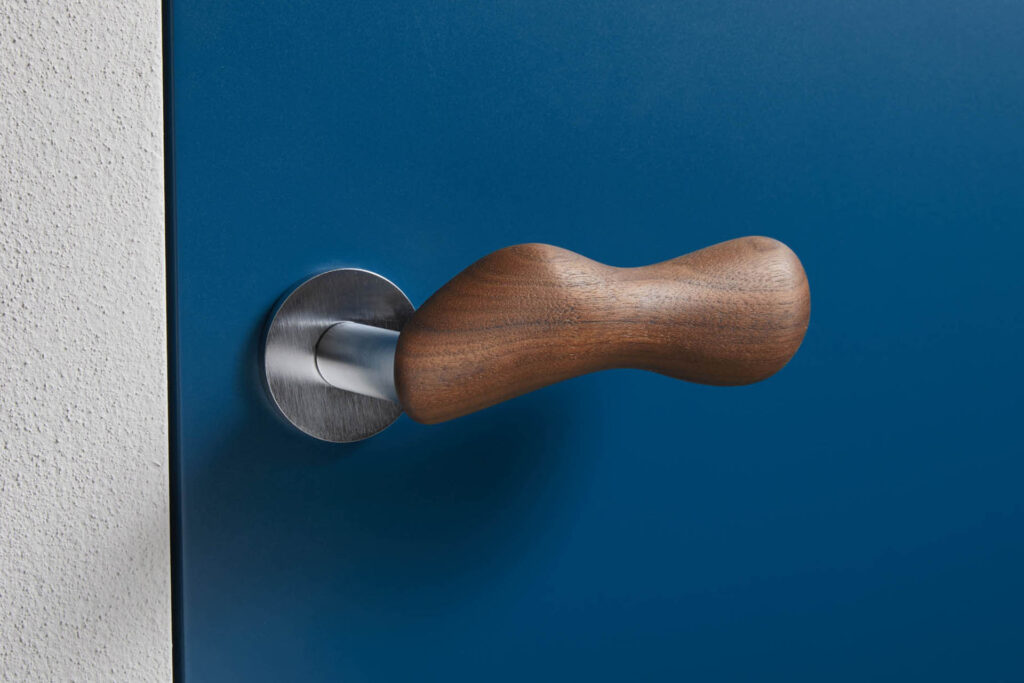
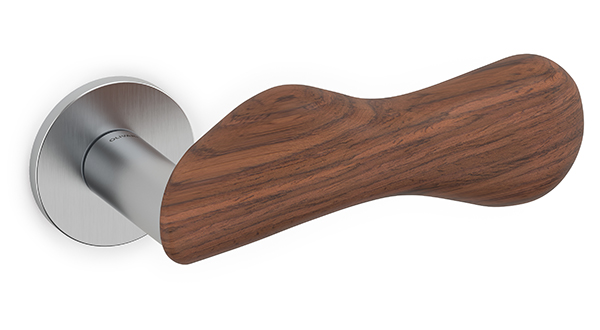
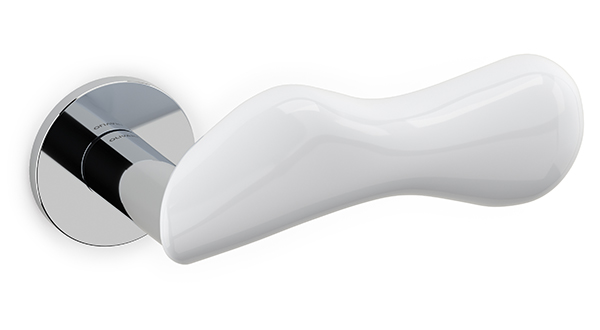
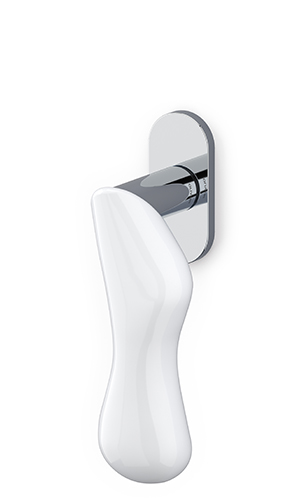
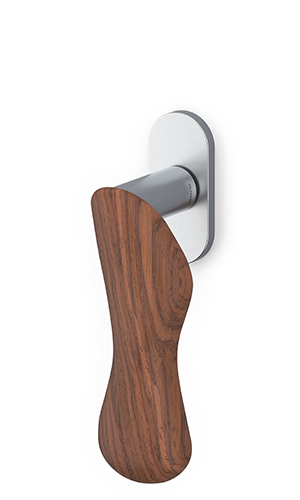
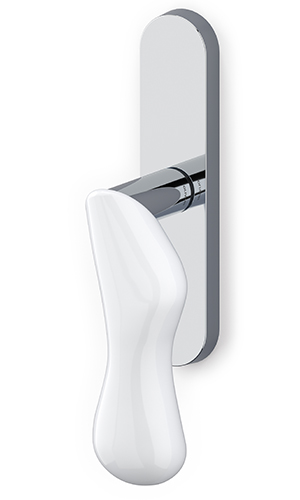
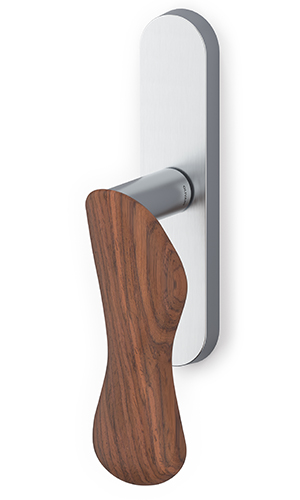
Chelsea, designed by Jean Nouvel, was born from the desire to overcome the traditional tubular geometry of the door handle. The project privileges the senses: a soft and enveloping shape, modelled on the imprint of the hand, and a warm, pleasant-to-the-touch material. Produced in collaboration with Riva1920 and a selection of precious and exclusive woods, Chelsea becomes a strong, iconic and highly expressive sign, capable of transforming the handle into a distinctive architectural element.
Jean Nouvel rejects even a material like steel from the outset, because he wants the senses to guide his formal definition. He explains that he wants them to be stimulated by a soft, sensual shape, pleasant to the touch, and by a warm, almost soft material. He finally wants it to become a sign thanks to the color.
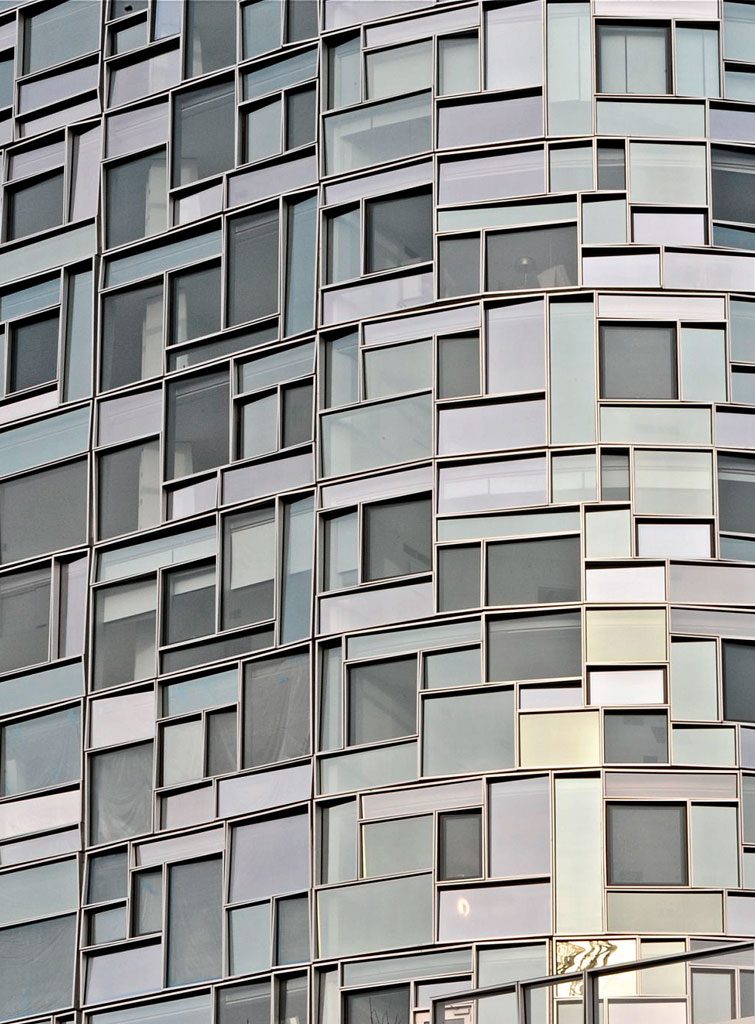
— 100 11th Avenue, New York 2010
— Jean Nouvel
Chelsea was born from these premises: it is modelled on the imprint of the hand that grasps it, and the grip is made with the exclusive woods of Riva 1920.
I felt a sense of wonder when I first saw the Kauri wood – a millennia-old wood – which Maurizio Riva introduced me to by incorporating it into the fascinating craftsmanship of Riva1920. Kauri is, in fact, a type of conifer that only grows in the subtropical climates of New Zealand. About 50,000 years ago, at the end of the last glacial era, a series of cataclysms still unexplained today brought down entire forests, burying them in water and mud. The particular characteristics of the mud and the complete lack of oxygen allowed this wood to resist the chemical processes of decomposition and reach our days with the same characteristics as freshly cut wood, so much so that it is used for the production of exclusive furniture and objects. It is easy to understand that being able to “touch” a material with this history can only evoke a great emotion. At Olivari it seemed natural to “translate” the Chelsea handle into this precious wood, a sculptural model born from Jean Nouvel’s artistic sensitivity, later expanding the range to Ulivo and Noce Canaletto, woods of strictly certified origin. The limited amount of material needed to produce a grip allowed us to act with a circular economy perspective, working in synergy with Riva1920 to make the best use of the pieces of wood not used for their products. — Antonio Olivari



 M232B-2
  K232B-2
  K232B-1
  C232-2
  C232-1